
True Stories(1986) Directed By David Byrne
 Directed By David Byrne
 "I used to like dinosaurs, I think allot of kids did"-David Byrne
  David Byrne of the Talking Heads, has made one of the oddest films I have ever seen.
 It feels like he came up with an idea, and then had to put allot of Talking Heads musical moments into it, to justify it's existence.
  The songs are plentiful (not the band's best, and a few of their worst), and the routines surrounding them are whimsical and absurd, and at times just terrible (there's a fashion show in the mall, that's pretty great though, recalling Fellini's Roma, a movie I hated, but which this makes more than a few nods).
  The film is set in a place called Virgil in Texas, a small town having its annual celebration of "Specialness", and follows Byrne(who also stars) as our guide to the town and its eccentric folk.
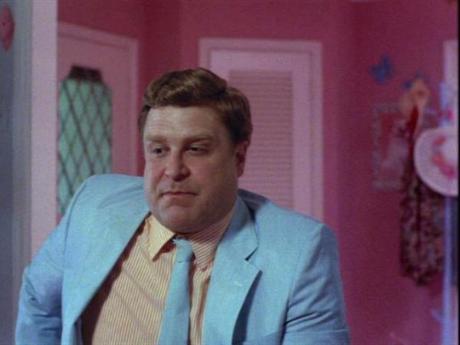
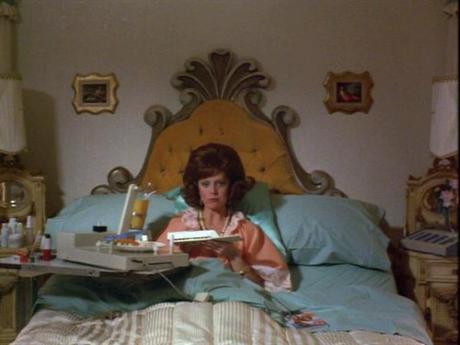
 While making the film Byrne collected all the oddest "true stories" he could from newspapers, like Spalding Grey as a man who has not spoken to his wife directly for 15 years, to a woman who has retired early and only wants to stay in bed and watch TV, to John Goodman, who if Byrne is narrator, than he is the closest we come to a main character.
  Goodman is trying to find a wife, by putting out televised commercials of himself; "I'm 6'3", and maintain a very consistent panda bear shape."
  It's dated, but very unique and a bit inspired.
  Rumor has it there are 50 sets of twins in this movie, I tried counting but lost track.
  It's just one of many strange, deadpan features of this movie, like David Byrne's cowboy hat and voice which never rises above monotone. "What time is it? No time to look back!"
  Allot of it feels out of place, well actually all of it feels out place, but it would be silly to act like it's oddness was only a detriment, it's also the driving point of interest.
  Like the fake static backgrounds of Texas landscape during Byrne's driving sequences.
 It's a beautifully made film, the cinematographer was a vet, and it's full of musings like "I really enjoy forgetting.
  When I first come to a place, I notice all the little details. I notice the way the sky looks. The color of white paper. The way people walk. Doorknobs. Everything.
  Then I get used to the place and I don't notice those things anymore.
  So only by forgetting can I see the place again as it really is."
  In the end, it's amusing and idiosyncratic portrait of Americana, the weird tale, tall tales, and Byrne's stylings both "Talking Heads" and poetic.
  Later David Lynch's short film "The Cowboy And The Frenchmen" would seek out similar territory, if not quite same surrealism of a big mouth bass on the wall next to a portrait of dogs playing poker and voodoo alters in the backs of pawn shops, the type on display in the town of Virgil.
  This is a movie I like to hum along to.
  "Shopping is feeling"


 In reversal of Ming Liang Tsai's "Wayward Cloud" where a city was caught in a debilitating drought, now the rain will just not stop falling.
  To make matters worse a strange disease is infecting the city which causes those afflicted to seek dark, moist corners, crawl around on all fours and show aversion to sunlight (basically they take on cock roach behavior; a Gregor Samsa stress disorder).
  The city has been evacuated aside from a few who can't/won't leave, but the water is soon to be cut off (water plays a vital role in WC as well).
  A slow, minimalist, and largely silent deadpan comedy of alienation ensues.
  The dilapidated apartments and ruined hallways double as the sights of garish musical numbers of Taiwanese pop songs from the 60's (though not as garish and stylized as those in The Wayward Cloud).
 The post-apocalyptic setting of the film is ironic counter part to the oneiric romance silently occurring between the two neighbors.
  The structure of the film flows back and forth between images of the banal daily activities of the "survivors" left in their apartments waiting to turn into insects, and the bright romantic songs that affirm life, love, and naivete amidst disaster.
 The Wayward Cloud had three types of scenes, adding in sex and meta-porn which is absent from "The Hole".

 Ming Liang Tsai was asked to make a film about the end of the millennium, and this is what he produced.
  A dryly funny, surreal, spared down, romance in a form that only he could make.
 Anyone who claims modern cinema is dead, has not been watching enough movies from Taiwan.
 The final scene is one of the most hopeful and poetic in recent film history illustrating human contact as the only remedy against 21st century blues; a helping hand to those in darkness.
 Directed By Ming-
 What a strange, strange, strange film.
  Strangest thing about this is that it was a big hit in Taiwan, grossing 20 million dollars, when the average film in the country makes under a million.
 When you see a cover with a girl tongue kissing a watermelon, its understandable to think I'll pass, but in this case you would be missing out.
  As best I can describe it, this is a film about two neighbors who live in an apartment building in Taiwan during an unusually hot summer and inexplicable water shortage.
 One woman sits around her apartment eating watermelon, while her next door neighbor makes hardcore porn films (which in the opening scene involve a watermelon between a
  The film is mostly minimalist, and truly beautiful in its austere compositions and delicate urban electric light; shadows and silhouettes are repeat motif used gorgeously.
  This is all interspersed with scenes of graphic sex, but no more than you would see Crash, Short Bus, or
  The detached view of sexuality would seem indebted to films like Crash and
  This becomes especially apparent in the last scene, where a women is unconscious/dead (there is some debate between whether this porn actress is dead or passed out from heat exhaustion), but the show must go on, and the crew literally props her up in a variety of positions so the actor/neighbor can have sex with her.
 This is all watched by the female neighbor, who discovers only moments before when she finds the porn starlet passed out in the elevator, what her neighbor and love interest does for a living.
 The flirting and relationship of the
  Our heroin is often shown in scenes rubbing water on her arms while alone, juxtaposed with our hero covered in his and someone
 They even share an Annie Hall homage, of giddily picking up crabs from the kitchen floor, and they laugh, and they love.
 The film swerves back and forth between their perspectives, meeting in an occasional musical number.
 It's also worth mentioning that this movie is also musical.
  There are about 5 or 6 full on musical numbers, and not merely spontaneous Karaoke affairs like Happiness Of The
  In one scene a character becomes a merman and serenades the moon from a water tower, in another Alice In Wonderland like giant flowers appear around the statue of a Taiwanese politician, in another after our hero is having some trouble getting it up, there is a song where a man a life-size penis suit is joined by dancing girls in a public bathroom.
 I cant stress enough how genuinely fantastic (from a technical film standpoint), and absurdly incredible they are.
 The songs themselves are assorted 60s and modern soul and folk sounds from Taiwan, and the songs are all unique and lovely in their own right.
 Weird as all this sounds, it comes together in a
  Goodbye Dragon Inn was so rigid in never moving its cameras and keeping its characters in the dark, it can distract from how formally inventive and
  The Wayward Cloud as a follow up has no such difficulties, it veers between the common and the theatrical so organically its stops feeling strange when the sing-along, follow the money shots, which flow into images of watermelons floating down a river.
 As for what Wayward Cloud means, I would say its an alienated love story.
 The two lead characters, I later read, were in one of Ming-
 It would have been simple for Ming-
 I cant think of any film as repulsive, arousing, beautiful, fun, and sad, at least not with all the gears running at once like they are here.
  In a way I thought it was a happy ending. The couple has come together right?
 No more lifeless proxy sex with sleeping girls and no more isolated peeking around the corner from what we desire.
  I
I  Or maybe their courtship was so convincing and extraordinarily arranged that I was rooting for the couple to come together, regardless of their strange and horrible acts.
 Only one thing is certain, the watermelon has lost its innocence in the fruit kingdom, and must now go in the adults only banana and kumquat, sectioned off by beads, part of the produce aisle.


